

 Search
Search
[{{{type}}}] {{{reason}}}
{{/data.error.root_cause}}
{{{_source.title}}} {{#_source.showPrice}} {{{_source.displayPrice}}} {{/_source.showPrice}}
{{#_source.showLink}} {{/_source.showLink}} {{#_source.showDate}}{{{_source.displayDate}}}
{{/_source.showDate}}{{{_source.description}}}
{{#_source.additionalInfo}}{{#_source.additionalFields}} {{#title}} {{{label}}}: {{{title}}} {{/title}} {{/_source.additionalFields}}
{{/_source.additionalInfo}}What Actually Makes a Video Feel Immersive to Watch
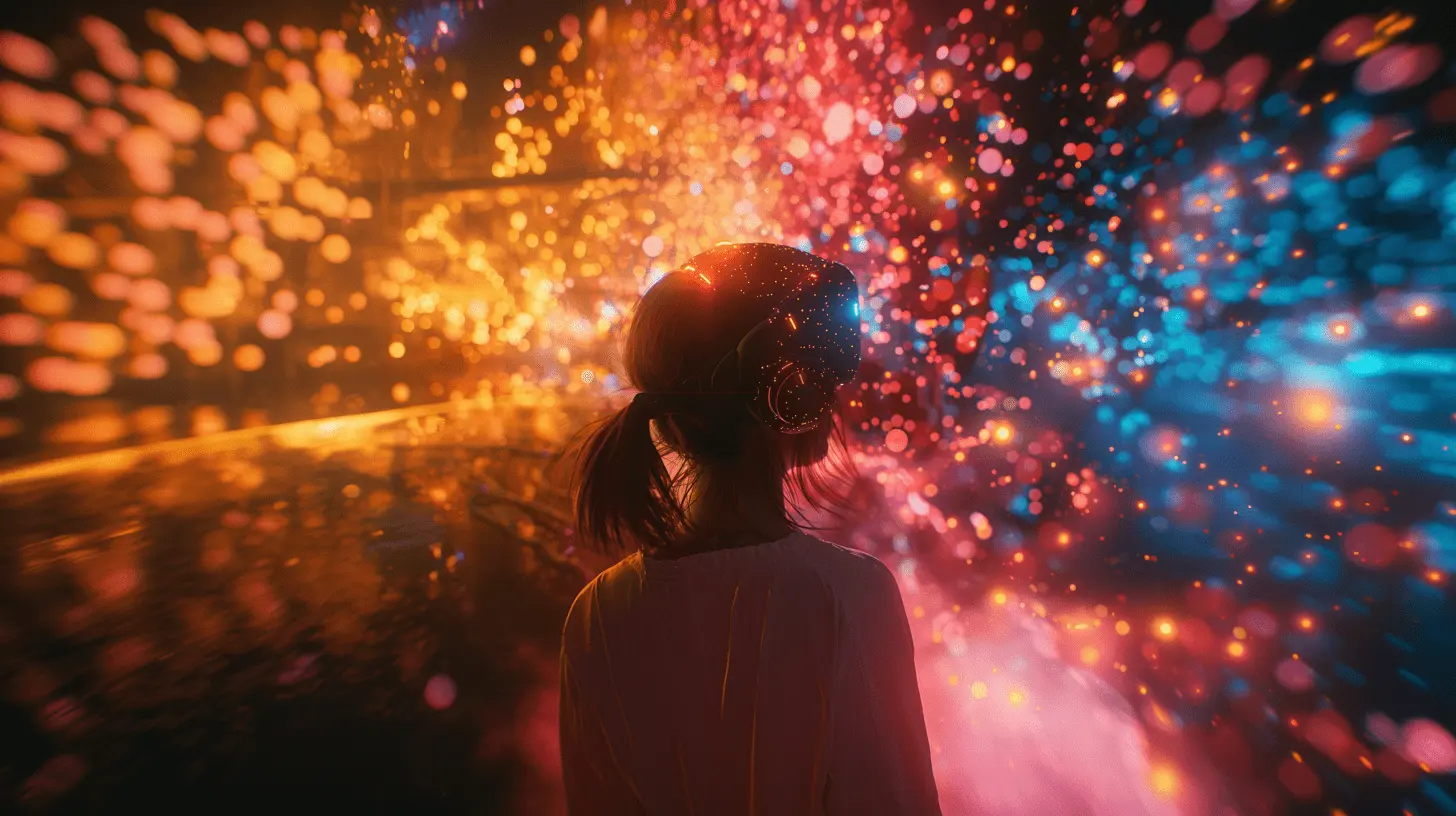
You can have stunning scenery, expensive gear, and perfect weather, yet still end up with a video that feels flat. Viewers might watch for a few seconds, then move on. Immersive videos are different. They pull people in and make them feel like they're part of the moment, not just watching it from the outside.
Immersion isn't about resolution or specs alone. It's created through a series of small, intentional choices that work together. Many people assume immersion comes automatically when filming with popular action cameras like Go Pro Australia, but the reality is that how you use your gear matters far more than what you use.
Understanding what actually makes footage feel immersive can completely change the way you film and the way your videos are experienced.
A Clear Sense of PerspectiveOne of the biggest factors in immersion is perspective. Viewers want to feel like they're seeing what you saw, not watching from an awkward or distracting angle.
Good perspective usually comes from:
- Camera placement that matches eye level or natural movement
- Avoiding angles that feel detached or mechanical
- Letting the scene unfold without constant repositioning
When perspective feels natural, the viewer's brain stops noticing the camera and starts focusing on the experience.
Movement That Feels Intentional, Not ChaoticAction doesn't need to mean constant motion. In fact, too much movement often breaks immersion rather than enhancing it.
Immersive footage tends to have:
- Smooth, predictable motion
- Purposeful changes in direction
- Moments of stillness between action
These pauses give the viewer time to process what they're seeing. Smooth movement helps the footage feel human, even in high-energy situations.
Sound That Matches the SceneSound plays a bigger role in immersion than many people realise. Even average visuals can feel engaging with good audio, while great visuals can feel empty with poor sound.
Immersive sound includes:
- Natural ambient noise that places the viewer in the environment
- Clear voices or key sounds without distortion
- Minimal distractions like wind rumble or clipping
When audio matches what's happening on screen, the experience feels more believable and grounded.
Framing That Tells the Viewer Where to LookImmersive videos guide attention without being obvious about it. Poor framing forces viewers to search the frame, which can feel tiring or confusing.
Effective framing often involves:
- Keeping the main subject clear and centred when it matters
- Allowing space around the subject so scenes don't feel cramped
- Avoiding unnecessary clutter in the background
When framing is thoughtful, viewers instinctively know where to focus, which keeps them engaged longer.
Consistency in Visual StyleJumping between wildly different shots, colours, or exposures can pull viewers out of the experience. Consistency helps footage feel cohesive.
This doesn't mean everything needs to look identical, but:
- Colours should feel natural and balanced
- Exposure shouldn't change dramatically between shots
- Transitions should feel smooth, not jarring
Consistency allows viewers to stay immersed without being distracted by visual changes.
Letting Moments BreatheSome of the most immersive moments come from holding a shot just a bit longer than feels necessary. Rushing from one clip to the next can make footage feel frantic.
Letting moments breathe means:
- Starting recordings slightly before the action
- Ending shots after the key moment has passed
- Giving viewers time to absorb the scene
These extra seconds often make the difference between footage that feels rushed and footage that feels cinematic.
Editing That Serves the ExperienceEditing can either enhance immersion or destroy it. Over-editing, excessive effects, or rapid cuts often draw attention to the editing itself rather than the story.
Immersive editing focuses on:
- Simple cuts that follow natural movement
- Audio continuity between clips
- Minimal effects that support, not distract
The best edits often go unnoticed because they feel natural.
Emotion Over PerfectionPerfectly sharp footage doesn't guarantee immersion. Emotional connection matters more than technical perfection.
Viewers connect with:
- Genuine reactions
- Real moments, even if they're imperfect
- A sense of presence and authenticity
Slight imperfections often make footage feel more real and relatable, which strengthens immersion.
Bringing It All TogetherImmersive videos aren't created by accident. They're the result of thoughtful choices about perspective, movement, sound, framing, and pacing. When these elements work together, viewers stop analysing the video and start experiencing it.
By focusing less on chasing perfect specs and more on how your footage feels to watch, you can create videos that truly draw people in. The goal isn't to impress with technology, but to make viewers feel like they were right there with you in the moment.
When you subscribe to the blog, we will send you an e-mail when there are new updates on the site so you wouldn't miss them.
About the author

Follow Us!


-
Verse of the Day - Isaiah 26:3
You will keep in perfect peace him whose mind is steadfast,
...
Donate
Please consider supporting our efforts. Since we're a 501 C3 Non-Profit organization, your donations are tax deductible.
Join Our Discord

Who's Online
We have 10331 guests and no members online
Comments